Find the Leak. Protect Your Property. Plan the Right Repair.
Capital City Plumbing and Leak Detection Services uses professional diagnostic equipment to locate concealed leaks and help property owners make informed repair decisions.
Professional Leak Detection Without the Guesswork
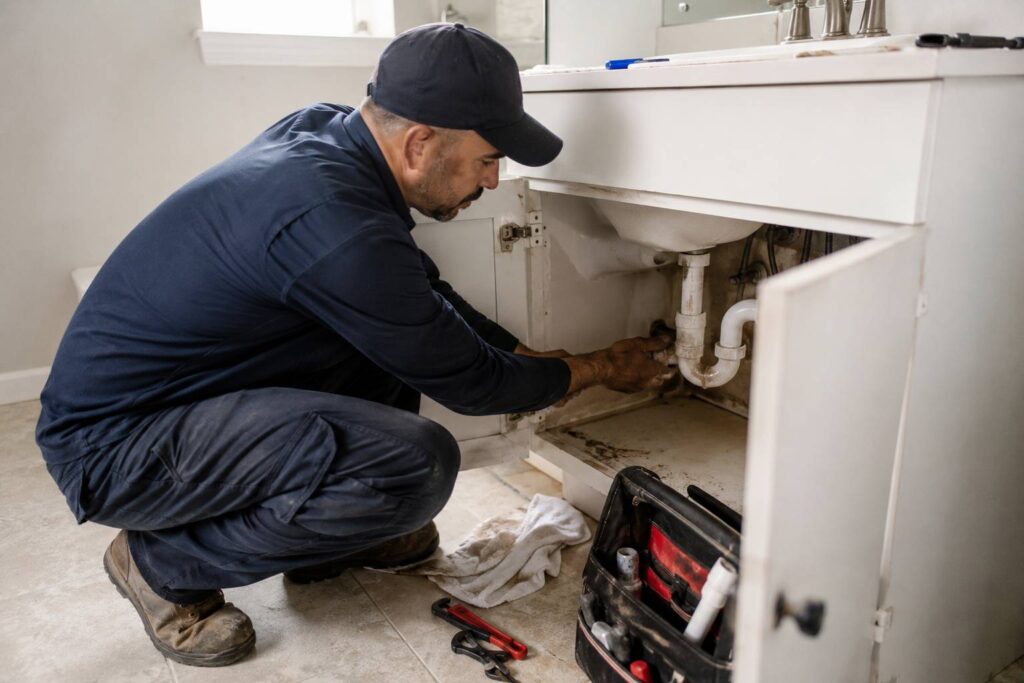
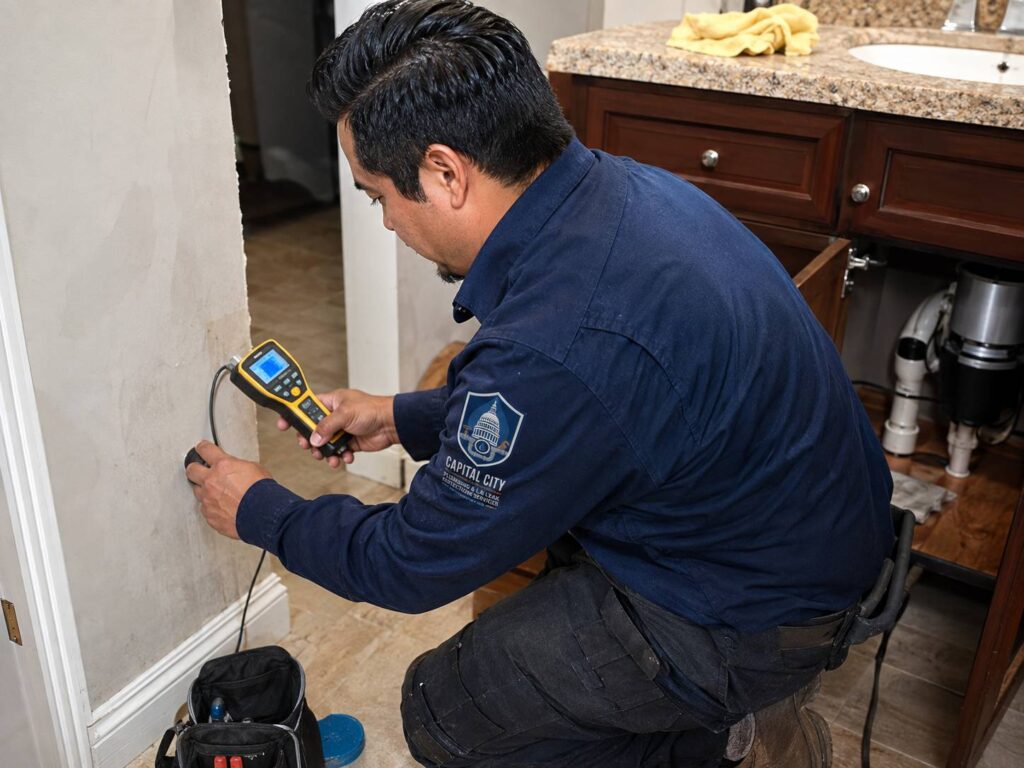
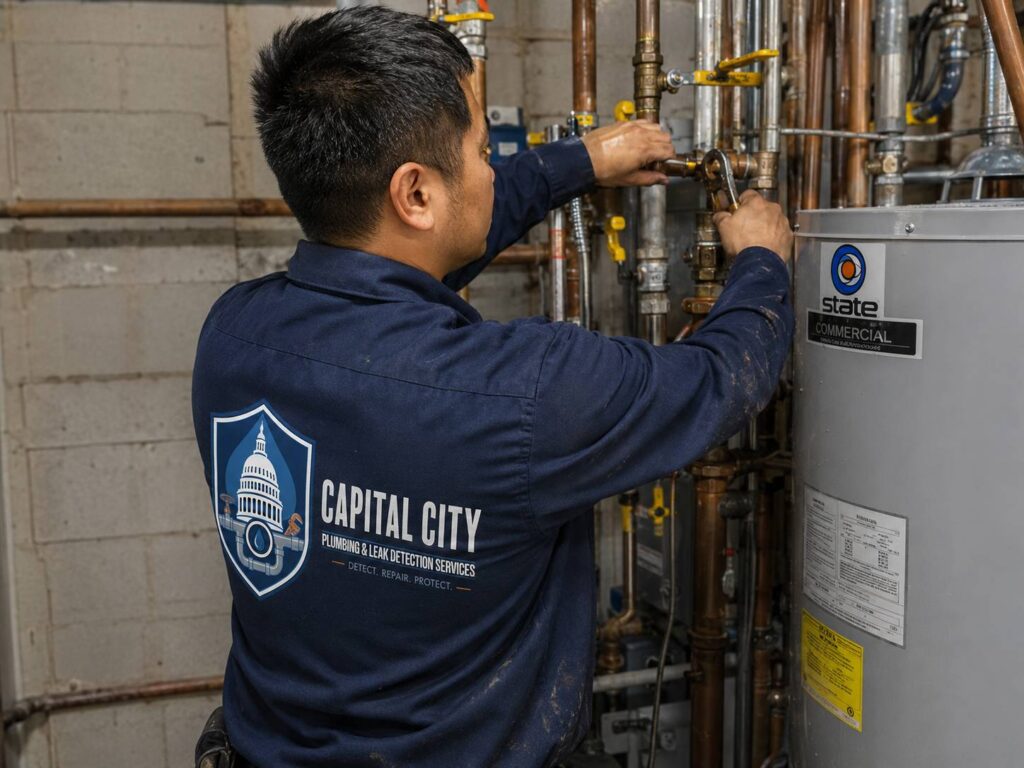
Not every leak appears as a visible drip. Water may travel behind drywall, beneath concrete, through soil, or along pipes before signs appear. Our technicians begin with the symptoms and plumbing system, then select the most appropriate combination of testing methods. These may include visual inspection, meter testing, pressure testing, moisture measurement, acoustic listening, line tracing, and thermal imaging.
Our goal is to narrow down the source as accurately as conditions allow, reduce unnecessary damage during access, and give you a clear path toward repair.
Our Leak Detection Services
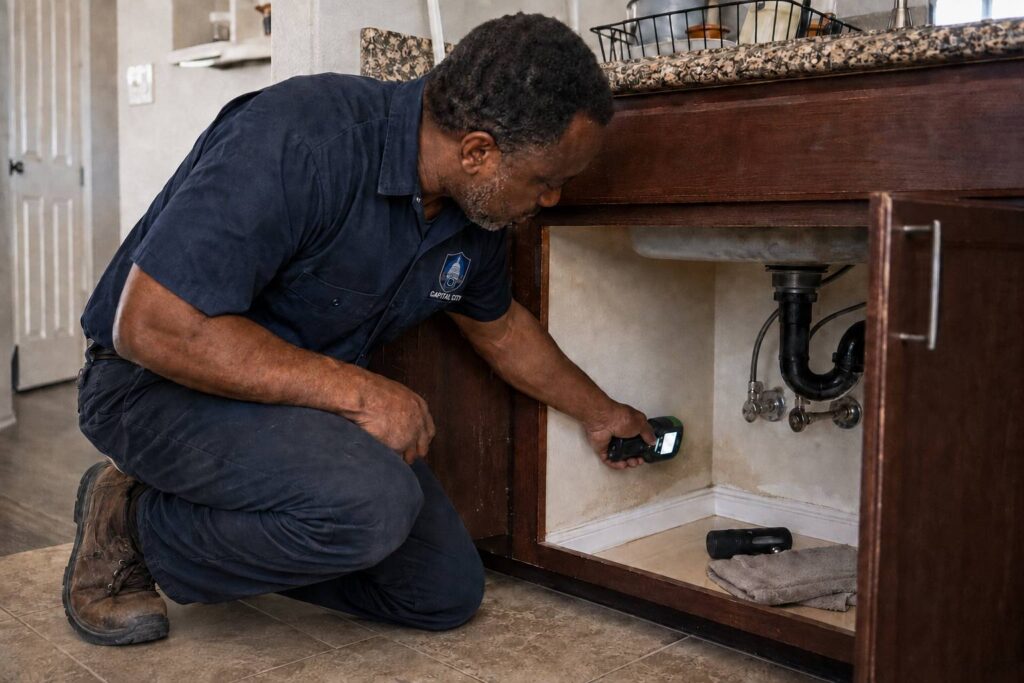
Hidden Water Leak Detection
Locate concealed leaks behind walls, above ceilings, beneath floors, and inside cabinets.
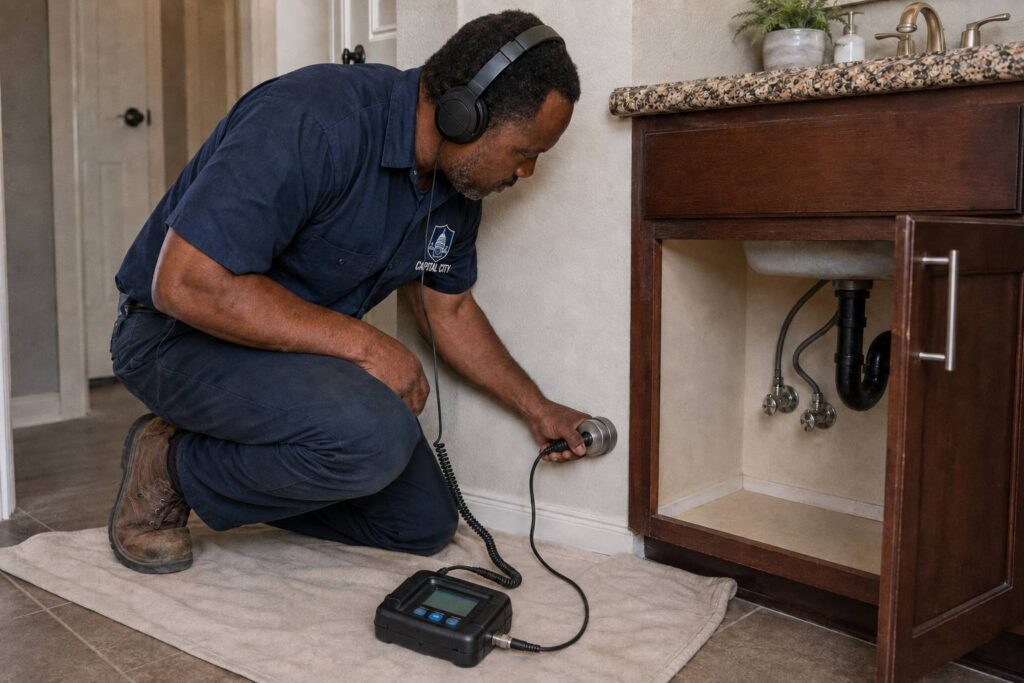
Slab Leak Detection
Identify suspected pressurized water leaks below or within concrete foundations.
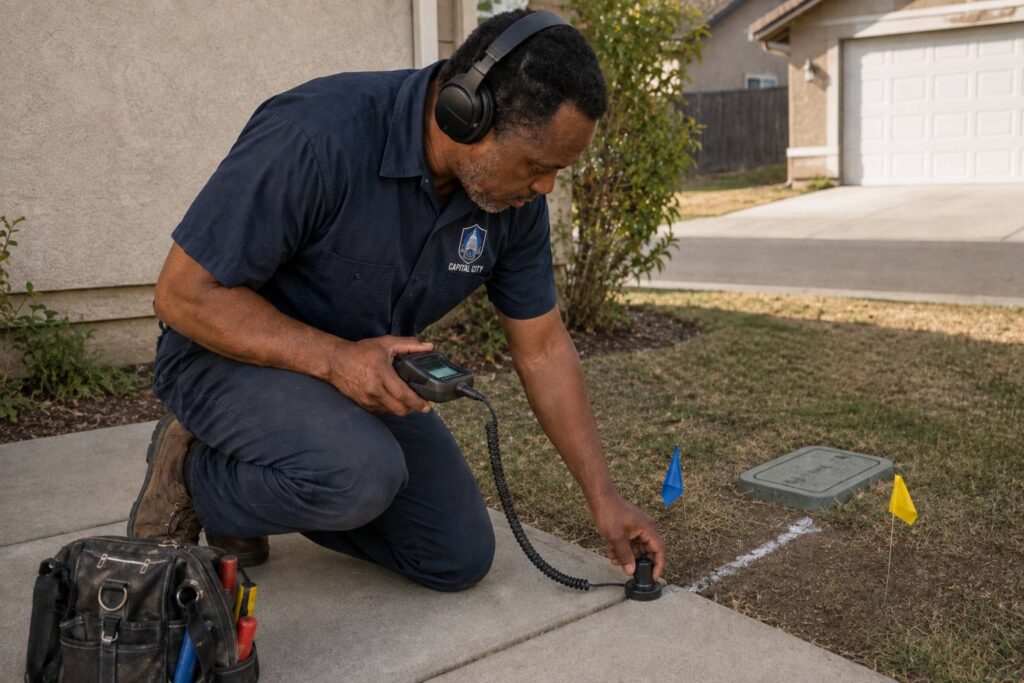
Underground Leak Detection
Narrow down leaks in buried water lines beneath yards, driveways, walkways, and landscaped areas.
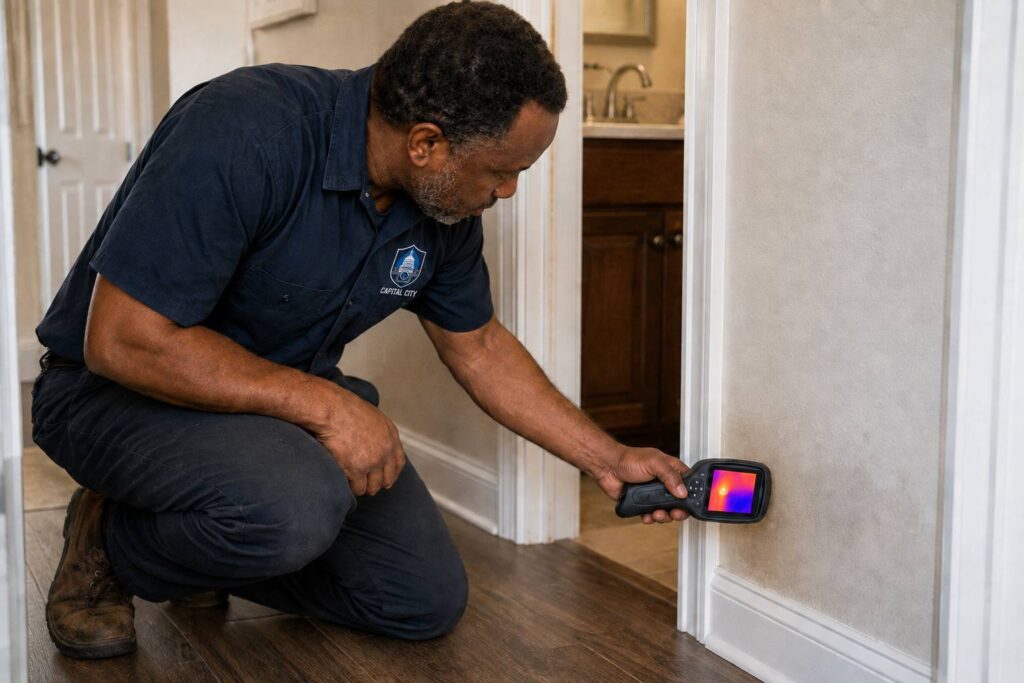
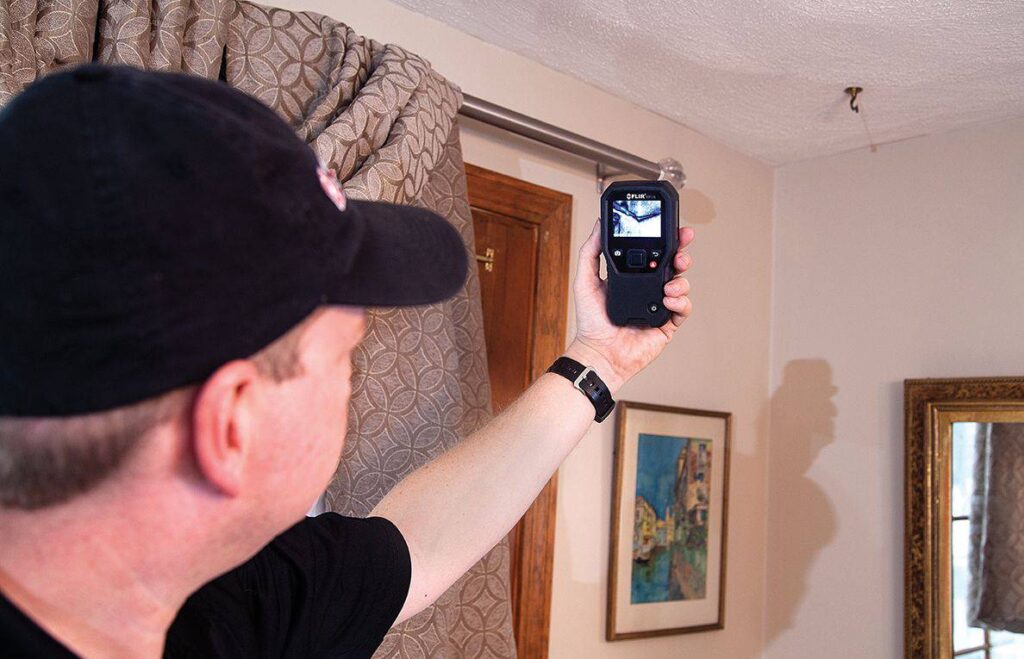
Thermal Imaging
Scan for surface-temperature patterns that may point to concealed moisture and guide additional testing.
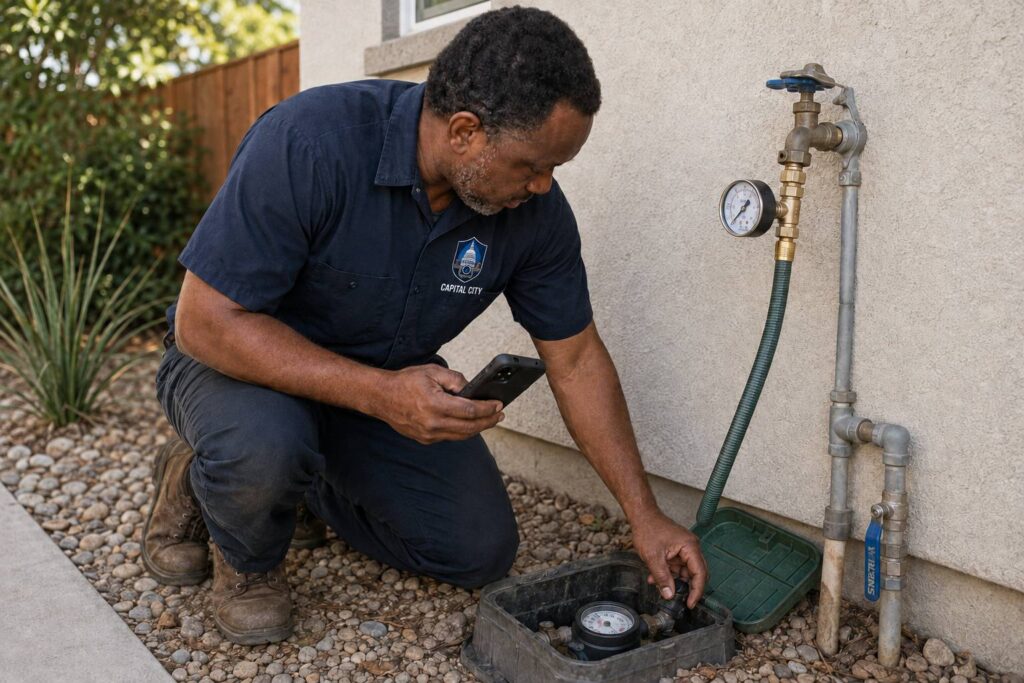
Acoustic Leak Detection
Use sensitive listening equipment to identify sounds and vibrations created by escaping pressurized water.
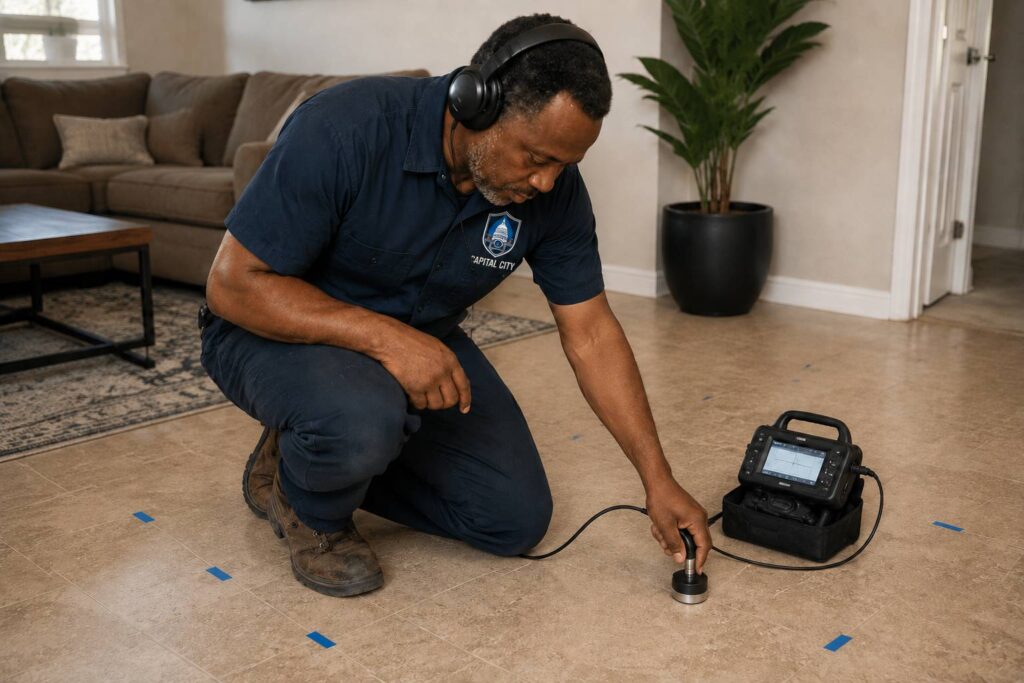
Water-Line Leak Detection
Diagnose leaks in interior supply piping, main service lines, and other pressurized water lines.
Common Warning Signs
- A water bill that increases without a clear reason
- A meter that continues moving when all fixtures are off
- Damp spots, stains, peeling paint, warped flooring, or mildew
- Warm, cool, or wet areas on a floor
- Hissing, dripping, or running-water soundsHissing, dripping, or running-water sounds
- Low water pressure or recurring plumbing problems
- Pooling water or unusually green areas in the yard
Our Leak Detection Process
01
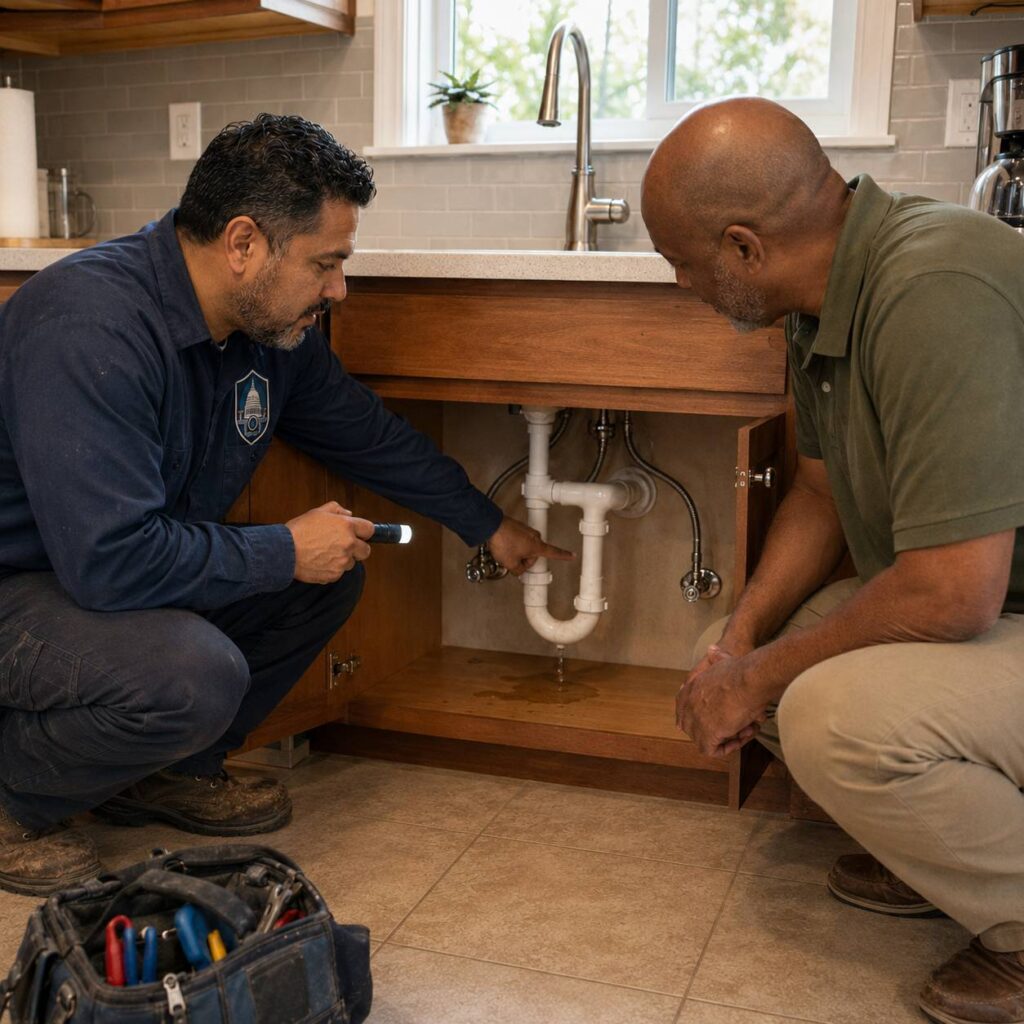
Initial Assessment
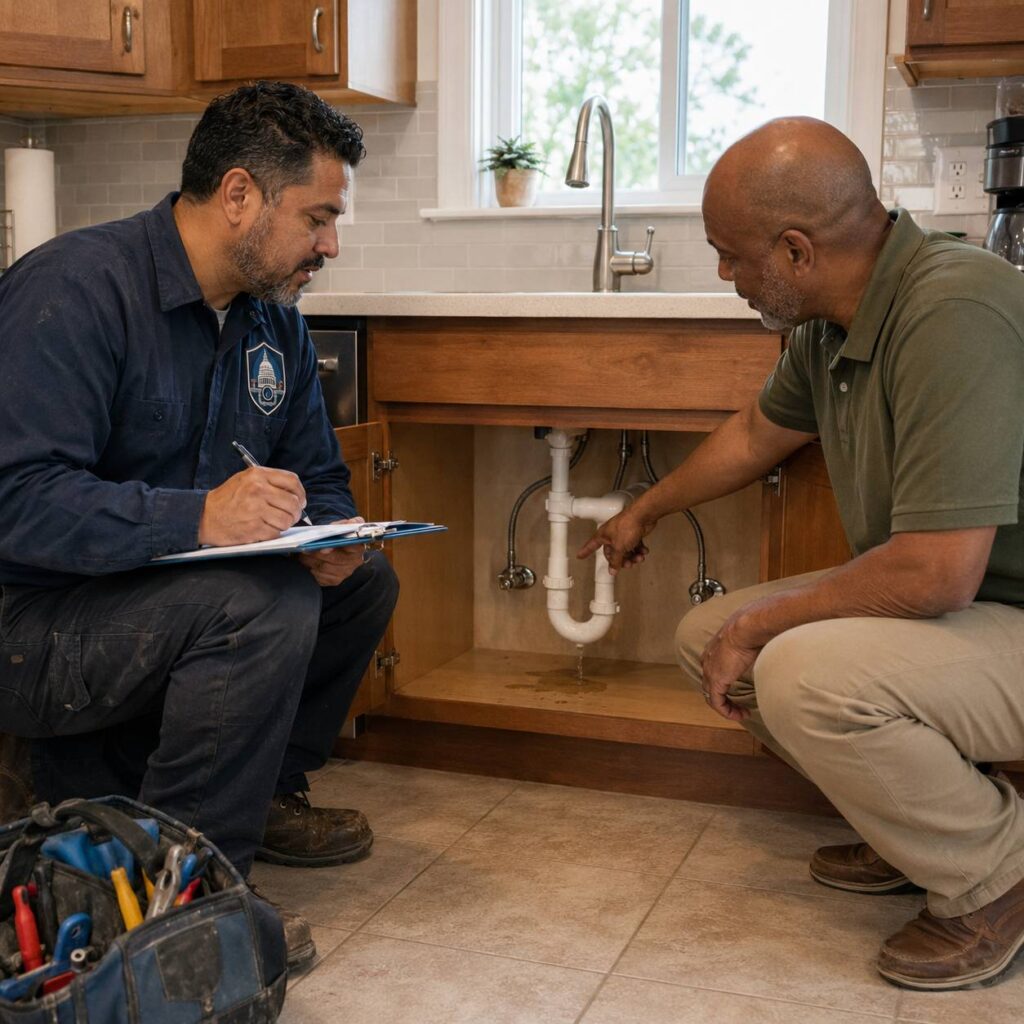
We review the symptoms, water-use history, affected areas, and plumbing layout.
02
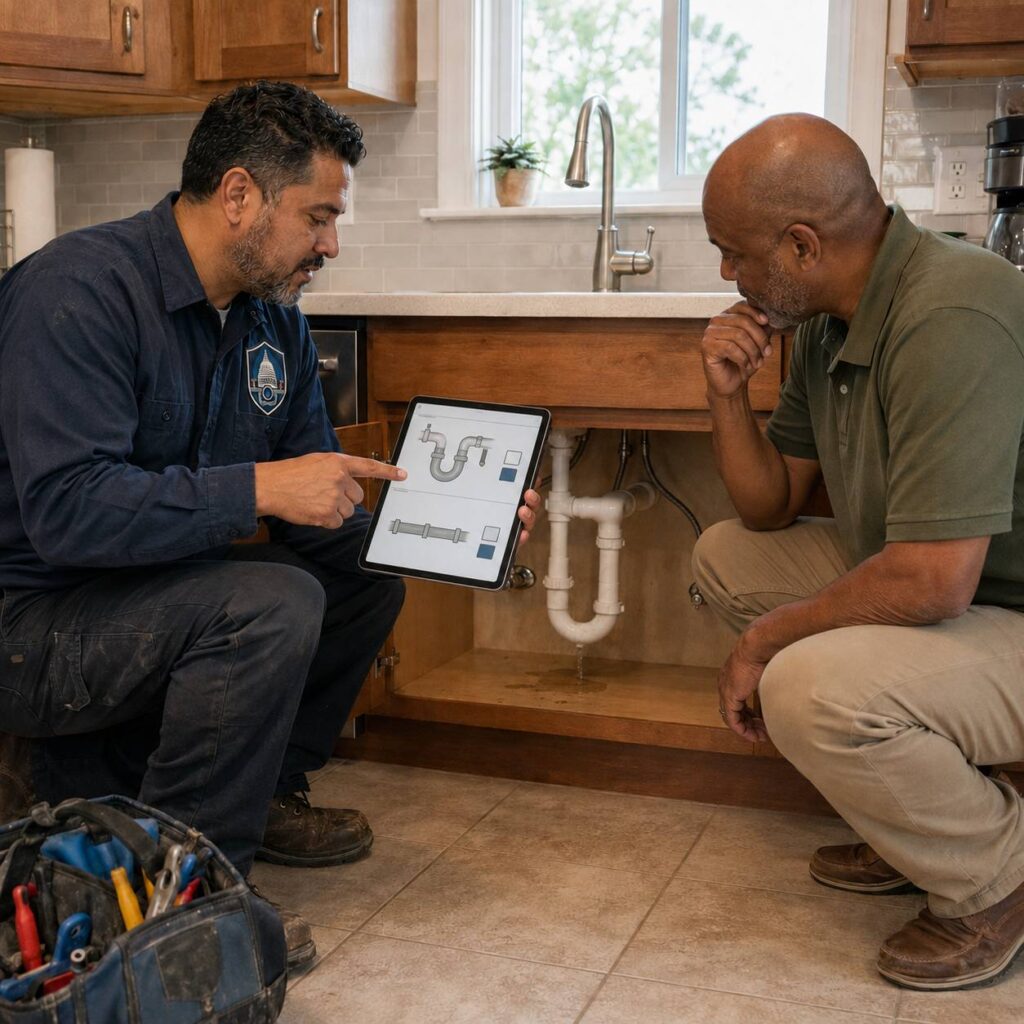
System Evaluation & Testing
We inspect accessible plumbing and perform basic checks to confirm or isolate the problem. And use our diagnostic methods best suited to the suspected leak and site conditions.
03
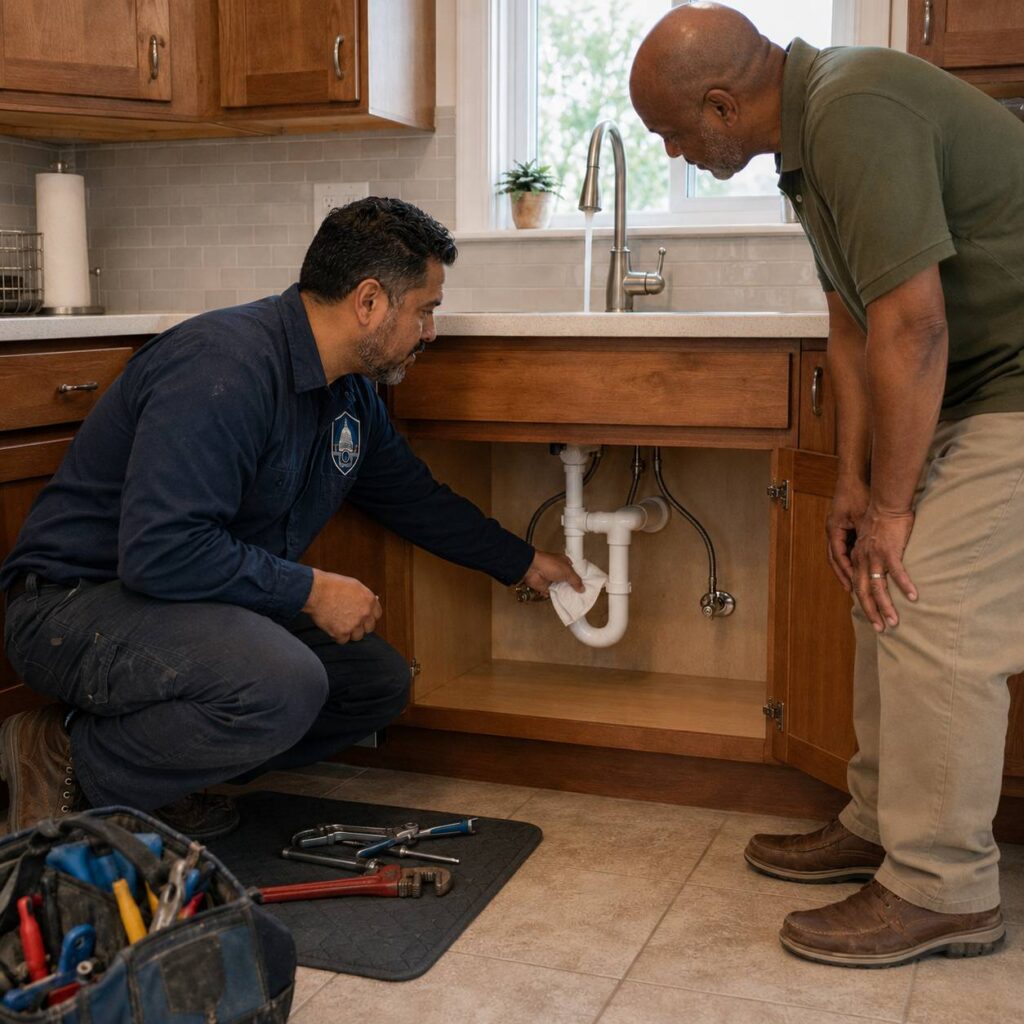
Clear Findings
We explain the likely source, mark the suspected area when appropriate, and discuss next steps.
04
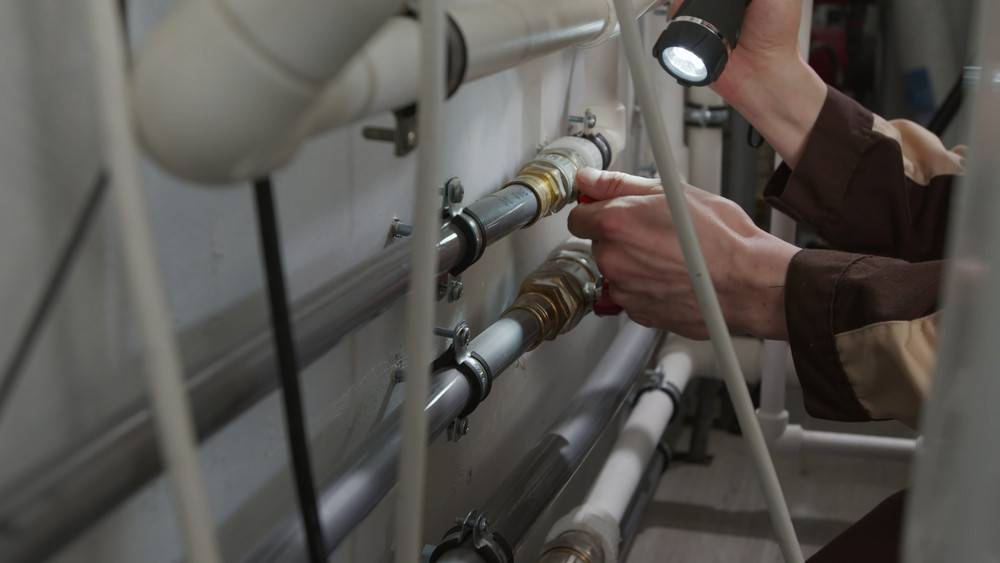
Repair Planning
When applicable, we provide options for a focused repair, reroute, or pipe replacement.
California Code and Permit Considerations
Leak detection is diagnostic work; the California Plumbing Code governs the plumbing installation or alteration that follows. If findings lead to repair, rerouting, or replacement, the work should follow the 2025 California Plumbing Code, local amendments, approved materials and listed components, manufacturer instructions, potable-water protection, proper joints and support, valves, testing, and required inspection. The permit path should be confirmed for the property address and scope before regulated work begins.
Your Peace Of Mind Starts With Clear Answers!

Do You Have Any Other Questions?
We are here to answer your queries anytime.
Many leaks can be narrowed down with testing designed to reduce unnecessary access before a wall, floor, or paved area is opened. However, some situations still require a small opening or excavation to confirm the source and complete the repair.
That depends on the pipe location, material, water pressure, site conditions, and symptoms. We may use one method or combine pressure testing, acoustic listening, moisture measurement, thermal imaging, and line tracing.
No. A thermal camera displays surface-temperature differences. Those patterns may suggest moisture, but they must be interpreted and confirmed with other inspection methods.
If it is safe to do so, shut off the affected fixture or the main water supply and contact a plumber promptly. If water is near electrical equipment, avoid the area and contact the appropriate emergency service.
A Suspected Leak Should Not Be Ignored
The sooner a hidden leak is investigated, the sooner you can limit water waste and reduce the risk of additional damage.